
After part 1 (must-have criteria for good car rental software) and part 2 (Car rental software: vehicle classes and vehicles), this part looks at dynamic pricing and car rental software.
Put bluntly, there are two categories:
- Category 1: “Dynamic pricing? My customers absolutely don't want that!”
- Category 2: “Dynamic pricing? Yesterday rather than today!”
This part of the Ultimate Guide is written mainly for category 2. That said, we'd strongly encourage those in category 1 to read this part too. This guide might just change your mind!
The idea behind dynamic pricing
Dynamic pricing means selling a product or service at different prices depending on supply and demand. It is based on the basic principle of economics: high demand = higher price, low demand = lower price.
Unlike static pricing, dynamic pricing responds to fluctuations in demand over a given period. For example: at the weekend, demand for vans is higher than during the week. Another example: outside the holiday periods, demand for minibuses is lower than during the holidays.
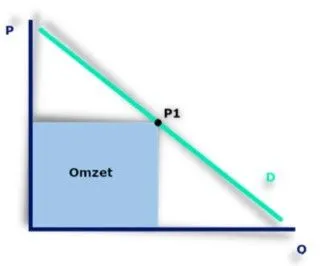
Every supply/demand scenario has an ideal price that maximises revenue. In other words: if you are aiming for optimal returns and supply and/or demand changes, you need to adjust the price accordingly.
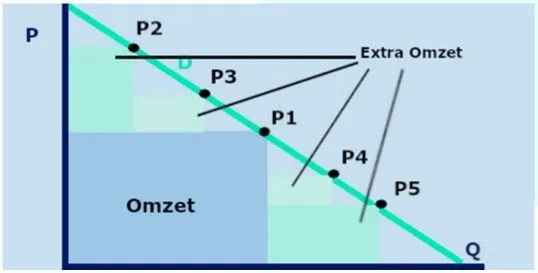
Six types of dynamic pricing
1. Segmented pricing in rental
Segmented pricing means offering an identical or similar product at different prices.
A company that makes good use of segmented pricing is Über. A customer who simply wants to get from A to B can book a (standard) taxi ride with Über. But if you want a slightly more luxurious car, you can book an Über Black at a higher rate. Although the core of the product is identical – a car with a driver that takes you from A to B – some people are willing to pay extra for a bit more service and quality.
The same happens in the car rental industry. Avis and Budget are part of the same company, but each brand has its own price point and its own ideal customer. The same goes for Hertz, Dollar and Thrifty.
2. Time-based pricing
Time-based pricing is a pricing strategy tuned to a particular time or period. This concept is especially popular for products or services whose demand changes over a given period.
Examples:
- Holidays in high season are more expensive than in low season.
- A taxi is often more expensive at night than during the day.
- Car rental companies raise their prices at the weekend, because demand is higher then.
- After the winter sports season, unsold skis go on sale.
3. Peak pricing
Peak pricing closely resembles time-based pricing, with the major difference that it is about a price increase during busy periods. With peak pricing, prices are raised significantly when there is high demand at a given moment.
Think of a holiday period, for example. The average holiday during the summer holidays is considerably more expensive than a week before or after.
4. Utilisation pricing
Utilisation pricing is a pricing strategy in which the price depends on the availability of the products/service. This requires a limited quantity of goods/services to be available at a given time (aircraft, hotels, rental, coaches).
We also come across this concept in the airline industry. The price goes up as more tickets are sold. The last plane ticket is more expensive than the first.
Incidentally, utilisation pricing is not often mentioned in the same breath as dynamic pricing. This can be explained by the fact that utilisation pricing is really an implementation, or rather an automation, of the other types of dynamic pricing described above.
5. Penetration pricing
During the rise of meal-delivery and rapid-grocery services we all became familiar with penetration pricing: a company enters the market with very keen rates (lower than its competitor) or with very keen offers. Be warned: the current rates will not always stay that keen.
Another good example is – once again – Über. An Über ride in late 2012 or early 2013 cost next to nothing. In fact, if you were early enough, you could stack up quite a few completely free rides with all the ‘Refer a Friend’ credits. The same applies to Über Eats. The huge discounts you got every weekend in the years when Über Eats entered the market are slowly being phased out.
6. Market condition pricing
All the pricing strategies mentioned above depend on the market (including supply and demand). The market is constantly moving, which means you have to keep benchmarking your prices again and again and then adjust them.
In certain extreme cases you may have to adjust prices abruptly. Think of the credit crisis, for example, after which demand for products dropped considerably in one go. To stay optimally profitable in times like these, you need to be able to switch your prices quickly.
Examples of dynamic pricing
- Different fares for plane tickets on the same flight
- High advertising costs just before Christmas
- Low rates and discounts from rapid-grocery services
- Night rates for taxis
- Expensive hotel rooms in and around Zandvoort during the Formula 1
- Different price tiers for a seat in a football stadium
- 35% off supermarket products
- Special discount promotions from car rental companies during the winter sports season
Why should you apply dynamic pricing in your rental organisation?
The main reason for dynamic pricing is to increase revenue or to steer supply and demand. It can be good for customers too, as the price during off-peak moments is often lower than the rate under static pricing.
Why wouldn't you apply dynamic pricing in your rental organisation?
There are two important arguments for not applying dynamic pricing. First, a customer may feel hard done by if prices are higher than what they paid before. Second, from the organisation's (employee's) perspective it can also be tricky, since staff can no longer work with a fixed price list. After all, the rates can differ at any moment.
Where should dynamic pricing be configured?
Dynamic pricing needs to be configured both in your rental software and on your website. The website is obvious: the customer reserves the vehicle at the (dynamic) price shown on the website at that moment.
For the rental software itself, that is not necessarily the case. After all, you could manually retype the price reserved on the website into your rental software, but there are two major objections to this…
First, you would then have to build the dynamic pricing into the website. Although technically possible, this is also a big challenge for the website developers (read: a cost item). Besides, ‘manually retyping prices’ is of course not exactly The Next Generation Proof: it is error-prone and a lot of work.
A more logical place is therefore to build the dynamic pricing module into the rental software and to connect that software to your website via an API or an iFrame booking portal.
How is it handled in rental software?
With a lot of car rental software it is currently not possible to set dynamic prices at all. With other software you can set dynamic prices per period, but not based on, say, availability or specific days. Finally, there is software on the market that does support ‘dynamic pricing’ but still offers little flexibility.
The software that fully supports complete dynamic pricing can be counted on one hand (perhaps even one finger). The reason is that the (local) car rental market simply doesn't seem ready for it yet.
How is it handled in your rental software?
We, however, have chosen to make dynamic pricing part of our company's DNA. Our rental software solutions and the underlying framework have been designed from the outset to make use of dynamic pricing. Through our software solutions you can configure all types of dynamic pricing:
- Time-based pricing through price adjustments per period or per day;
- Peak pricing and penetration pricing through a combination of price adjustments per period/day and pricing scenarios depending on availability.
- Segmented pricing through upselling;
- Utilisation pricing through pricing scenarios depending on availability.
To manage all of the above we have built a Price Optimisation module. In it you can easily make price adjustments based on AI predictions (artificial intelligence).
Competitors' prices
When we introduced our dynamic pricing to local car rental companies, at some point we received feedback that another rental software provider intended to build a dynamic pricing module based on a so-called ‘price scraper’. With this, you adjust your prices based on your competitors' prices (hereafter: the derived dynamic pricing method).
This derived dynamic pricing method has proven itself in, among others, the airline and international car rental industries, where competitors offer the same product, the customer group is the same and the product is offered at the same location. Add to that the fact that brokers let you compare the prices of these providers.
Although it's good to keep an eye on your competitors' prices, in today's local and regional car rental world everyone uses static pricing. If you then apply the derived dynamic pricing method, effectively nothing happens.
Besides, we believe you're better off being the one who sets the price. This applies especially to local and regional car rental companies, which have earned their place through specific unique characteristics (for example: family business, flexibility, willingness to think along with the customer). Taking competitors' prices as the starting point for your own prices doesn't fit with that. It pushes you towards a commoditised market, where you risk losing your own unique selling points (USPs).
Closing remarks
In this part we have looked at questions such as: ‘what is dynamic pricing?’, ‘why should I apply dynamic pricing in my rental business?’ and ‘how should dynamic pricing be configured?’. Although the idea behind dynamic pricing is fairly simple, putting it into practice is complex. Would you like to know more about dynamic pricing and how you can apply it in your business? Feel free to get in touch. We'd be happy to talk you through our experience and the solutions we can offer.
Which category do you belong to? - Category 1: “Dynamic pricing? My customers absolutely don't want that!” - Category 2: “Dynamic pricing? Yesterday rather than today!” Let us know and get in touch with the author via the link below.
Book an Appointment