Rental vehicle rates are going up (too)
Rising prices surprise no one any more. In recent years the whole world has faced high levels of inflation: a general rise in the prices of goods and services. Prices of consumer goods and services in the Netherlands, for example, rose by 10% on average (2022 compared to 2021) (source: CBS, Statistics Netherlands) .
The price of a rental vehicle is rising too. According to a KPMG study commissioned by BOVAG (the Dutch mobility trade association), rental prices for hire cars will rise by roughly 30% over the next 7 years. And they have to, because the margin on rental vehicles is coming under pressure.
Main factors behind the price increase
The main factors behind the price increase are:
1. Rising costs
Average costs for car rental companies are expected to grow by around 30% to an average of € 44 per day (passenger car).
The main rising cost items are: i) interest costs, ii) wage costs and iii) inflation (insurance and other operating costs). Not all costs are always passed on to customers. This depends on the type of rental company, the type of customers and market developments.
Electrification costs, such as installing charging infrastructure, are expected to be passed on to the customer barely, if at all. Electrification costs are estimated at around € 500 per EV per year.
3. Rising depreciation
Prices of passenger cars and vans (list price) are expected to rise by 4.5% to 5% per year. This is partly due to more expensive components becoming pricier and the disappearance of the cheap A-segment type of cars.
Higher purchase prices push up depreciation. This is partly passed on to the customer.
4. Dynamic Pricing
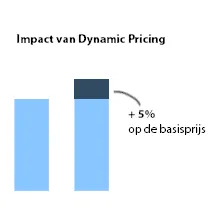
Dynamic Pricing sits at the core of RentVisie car rental software. So it does not surprise us that KPMG too concludes that the revenue of car rental companies rises by an average of 5% per year when they apply dynamic pricing. The expectation is therefore that the majority of the market will be applying dynamic pricing before 2030.
With dynamic pricing the car rental company adjusts the price of its vehicle classes based on demand in the market. Put simply: on busy days the price goes up and on quiet days the price goes down.
In the RentVisie rental software we have implemented a unique AI-based dynamic pricing. This adjusts the rate of a vehicle class fully automatically based on supply and demand.
Want to know more about Dynamic Pricing and how we apply it? Get in touch with us.
5. Stronger growth of the consumer market compared to the business market
The business / consumer ratio is expected to shift in favour of consumer customers. As the rates charged to consumers are generally higher than those charged to business renters (often discounted), the average price rises.
Expected average rental costs
In 2017 the average daily rates for passenger cars and vans were € 43 and € 57 respectively. In 2022 this was € 53 and € 69.
The expectation is that in 2030 the average rental price of passenger cars will be € 69. The average rental price of vans will be € 91.
Conclusion
Prices keep rising. As practically all costs of car rental companies will increase (sharply) in the coming years, the rental price of a car rises too.
The odd one out is the application of dynamic pricing. By 2030 the majority of the market is expected to apply dynamic pricing. Car rental companies that introduce this concept can increase their revenue by an average of 5% per year.
Want to know more about this article?
Get in touch.